
A design system without a framework, at Digix
At Digix every product used a different technology, so we wrote the design system in plain HTML, CSS and JavaScript, with CSS variables as the contract. Years later it was still standing after a rewrite of PapelZero in Next.js.
From August 2017 to January 2021 I worked at Digix, on a family of government products in Brazil. The main one was PapelZero, which takes the paperwork of government processes digital and speeds up transfers and funding to city governments.
Each product was born at a different time, with a different team and a different technology: React, Angular, Aurelia, Knockout, Vue, plus frameworks in Java and C#. And all of them needed to look like the same family.
Why not a React library
Today, when someone says design system, they almost always picture a React component library. There, a React library would have served one team and left the others out, and building one for each framework would mean writing the same system over and over, with every copy aging in its own way.
So we wrote the design system in plain HTML, CSS and JavaScript. To use it, a product wrote the markup with the system's classes, and it didn't matter if that markup came from a React component, an Angular template or a Java page.
CSS variables as the contract
Color, spacing, radius and typography lived in CSS variables that any product could use. It's what everyone calls tokens today, but back then nobody around us used that word.
I recreated the example for this article, with nothing from Digix's code:
:root {
  --ds-primary: #2f6fdf;
  --ds-radius: 6px;
  --ds-space: 12px;
}

.ds-button {
  background: var(--ds-primary);
  border-radius: var(--ds-radius);
  padding: var(--ds-space) calc(var(--ds-space) * 2);
}
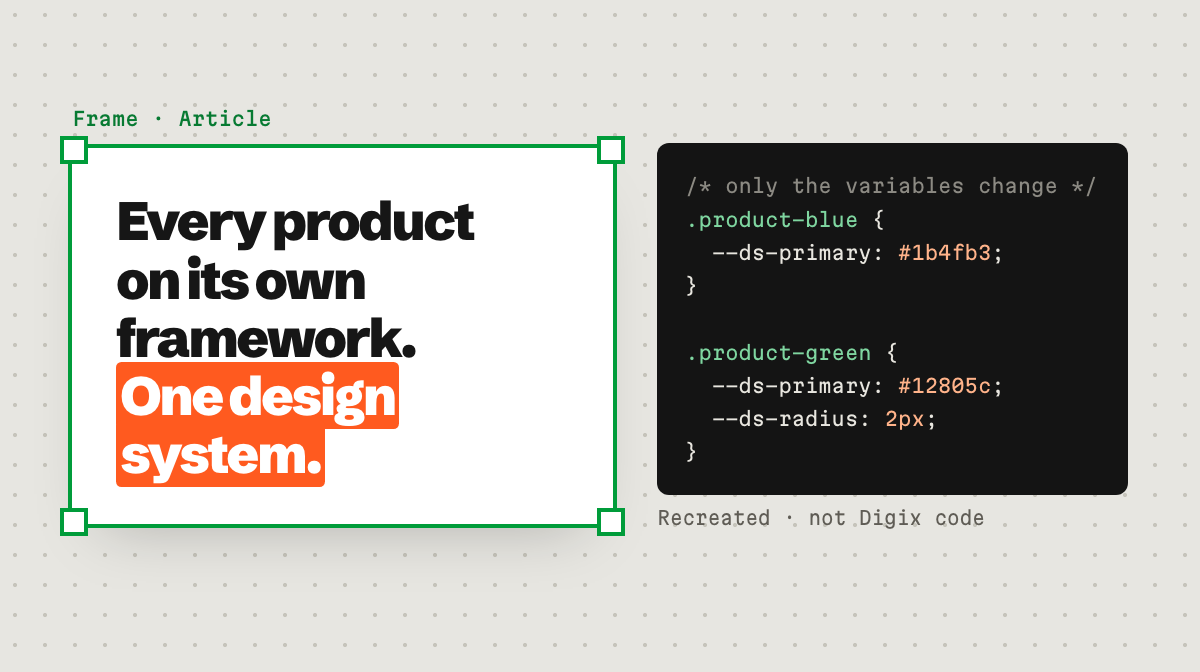
When a product needed a different look, it didn't rewrite any components, it just changed the variables:
.product-green {
  --ds-primary: #12805c;
  --ds-radius: 2px;
}
CSS variables became the contract between the system and the products because they're the one thing all of those technologies read the same way.
How the teams started using it
The question that always comes up is how you get a team to use the same tokens. In our case, the technical decision did half the work: adopting the system never meant rewriting the product, so nobody had to stop their backlog to get on board.
The other half was not handing it over finished. We built it together with the whole development team, and every team adopted it. I think a rule the team helped write is a rule the team already knows.
Back at Digix in 2025
In 2025 I went back to Digix as a consultant for a year and rewrote PapelZero in Next.js. The design system stayed. The technology underneath changed, and the classes and variables on top stayed the same. If it had been tied to a framework, it would have gone away with the old one.
And I still start in the same place today. In my site factory, the theme package takes two brand colors and generates the whole set of tokens, which is the same idea from 2017 with better tools.
Before I pick the tool for a design system, I list who's going to use it and in what technology, and if the list has more than one, the tool can't belong to just one. Then I write the decisions as variables before I write any components, because components change with the framework and the brand color doesn't. And I build it with the people who'll use it, because a system handed over finished becomes one more thing the team has to maintain.